The folks at Emerging Civil War are looking at AI in the history field for the next week or so, which prompted me to share this vignette about a halucination Gemini AI tried to inflict on me.
Lighting director Chip Monck famously announced to the crowd at the 1969 Woodstock Festival, “The warning that I received, you may take with however many grains of salt you wish, that the brown acid that is circulating around us, is specifically not too good. It’s suggested that you do stay away from that; of course, it’s your own trip, so, be my guest. But, please be advised that there is a warning on that one.”
When it comes to AI-enabled web searching, researchers may want to heed Chip’s advice.
A recent MIT Sloan Teaching & Learning Technologies report cited OpenAI’s own research when it noted, “Despite this increased accuracy, recent evaluations have indicated that advanced reasoning models still do not consistently eliminate hallucinations; during multi-step reasoning, the models make “strategic guesses” where they generate plausible but false statements when uncertain.”
My recent experience demonstrates a need to continually question results that AI-enabled web searches generate. Unless one crafts a query with appropriate caveats (and those can very, depending upon the search engine), AI-enablers have a tendency to “hallucinate” when attempting to answer questions for which they are not optimized to analyze.
When an AI-enabled search engine blends traditional database retrieval with a Generative AI or Large Language Model (LLM), the tendency to “hallucinate” produces what my years in the Army taught me to call an MSU (Make Stuff Up) experience. This most commonly happens in the “data void” that your AI encounters when searching for a low information topic. When the search is “for something obscure, niche, or hyper-local, there isn’t enough reliable training data or live search results for the AI to pull from,” according to, yes…Google Gemini.
The AI model attempts to “fill in the blanks” by accessing patterns from its training data, that can result in highly plausible-sounding but entirely fabricated facts, names, or events.
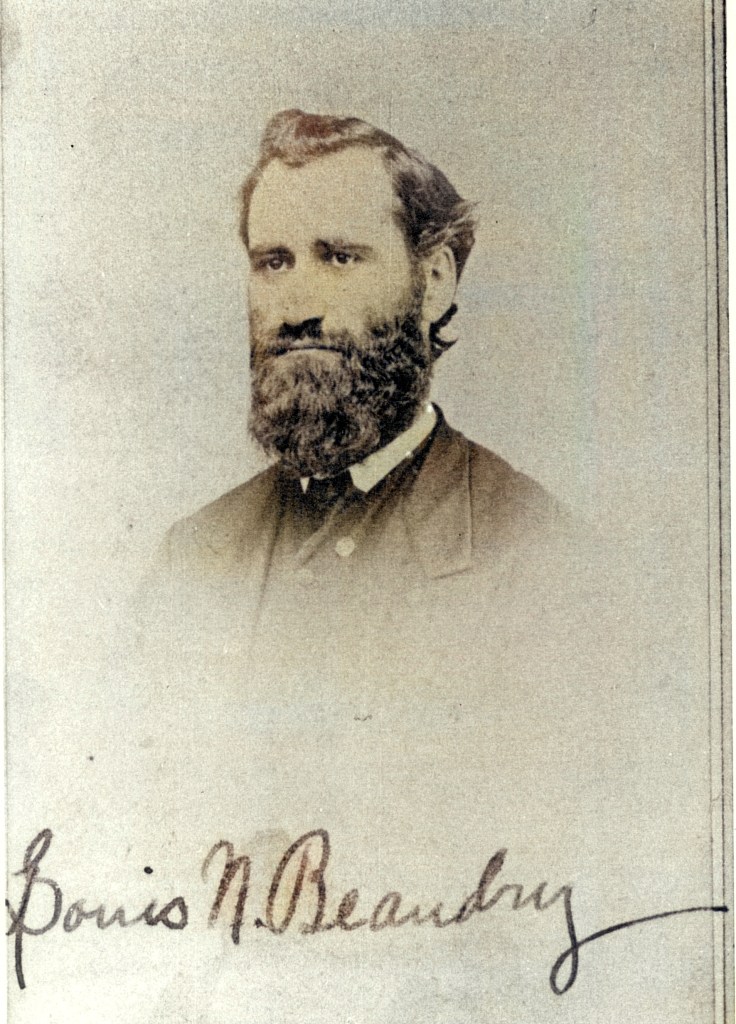
My specific experience with a very convincing hallucination began when I asked Google Gemini to assist me with my material analysis of Louis N. Boudrye’s (also Beaudry) Historic Records of the Fifth New York Cavalry. Realizing that four different editions are digitized and available online, I typed a simple and unqualified query into Google Gemini: “I am interested in the details of typography in the multiple editions of Beaudry’s ‘Historic Records of the Fifth New York Cavalry.’”
Almost instantaneously, Gemini produced two apparently authoritative and articulate summaries—one each for the 1865 First Edition and another for the 1868 Enlarged Third Edition. If I did not previously know a little bit about the 5th New York Cavalry, and perhaps a little more about letterpress printing, relying on these two paragraphs could have led me into a potentially embarrassing—or professionally damaging—situation.
Contrary to the hallucination that Gemini dreamed up, neither edition includes chapter initials set in “basic, unadorned drop-caps.” The compositors who set the types used no drop caps at all in any part of the book. Additionally, despite Gemini’s assertion that C. Van Benthuysen printed the book, the front matter includes a page that clearly states, “J. Munsell, Printer.” Nowhere in the book does Van Benthuysen’s name appear, and subsequent searches produces no association of Van Benthuysen with Boudrye or his history of the 5th New York Cavalry.
Gemini’s hallucination about the 1868 Enlarged Edition (which it correctly identified as the Third Edition), was even more trippy…and might have tripped up a more casual historian. It began with the sentence, “When Joel Munsell took over the printing in 1868, the typography shifted dramatically.” This is problematic for two reasons. First, as demonstrated above, Joel Munsell was the printer of the First Edition. Second, the typography did not shift at all. The portion of the main text that was in the first edition (pages 17 through 358) are identical in the third edition. The paginations and line justifications are identical and the idiosyncratic typographic artifact of two upside-down commas being used to form opening double quotations appear in both texts. The only changes are some minor edits to the front matter (some of which were carried over from the Second Edition, which also appeared in 1865) and the addition of new content in pages 359 through 385.
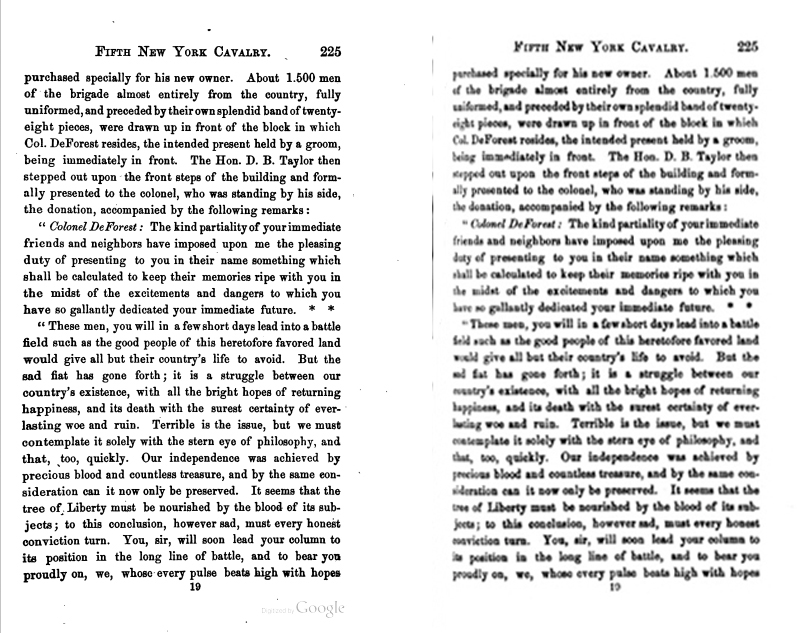
Gemini’s claim that “Munsell despised the cold, high-contrast Modern Roman typefaces common in the 1860s” has no basis in anything published about Munsell. “The hallucination’s further assertion that, “For the 1868 edition, he utilized an Old Style typeface (akin to Franklin Old Style or Caslon), which featured bracketed serifs, lower contrast, and an overall darker, warmer text block that was much easier on the eyes” is also a fabrication. As noted previously, the text is identical because, almost certainly, Munsell relied on stereotypes, or a kind of cloning, of the original hand-composed types. These would have withstood the pounding of the high speed press better than a form composed of metal types and also would have been able to be stored for reuse on future printings. Another giveaway that the printer used stereotypes is the errant “19” that appears at the bottom of each edition’s page 225.
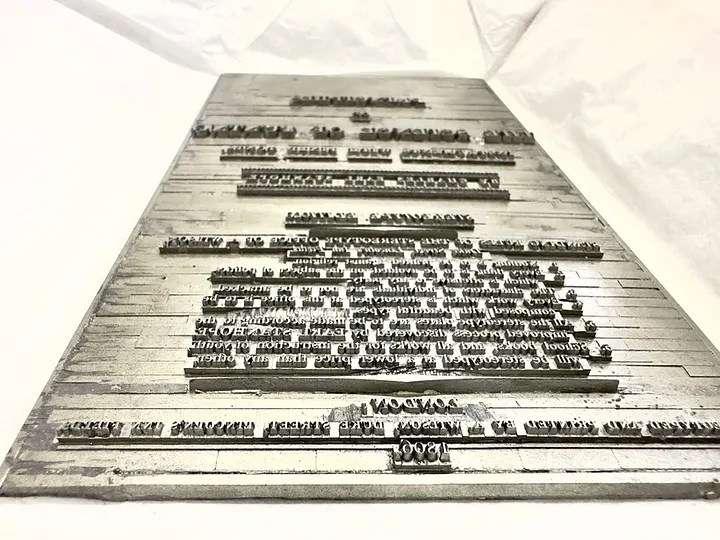
Among Gemini’s other hallucinations, the third edition has no “Signature Typographic Ornaments,” no changes in type sizes to accommodate the additional pages, and no discernible changes to the typography of the title page.
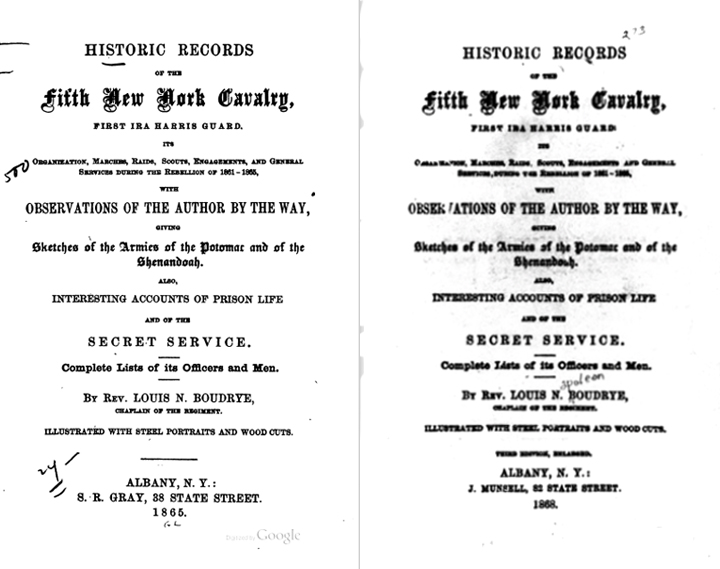
The title pages of the First (left) and Third (right) editions, despite Gemini’s attempt to analyze their 19th Century typographical attributes) are nearly identical. The only changes in the Third edition are the deletion of the horizontal rule at the bottom of the First Edition and its being replaced with the new edition information. Note that J. Munsell printed boith editions, but the First Edition showed New York stationer S. R. Gray’s name, as he coordinated the book’s first publishing.
So, just like Chip told the groovy people at Woodstock, if you indulge in AI for your internet searches, know that it comes with a warning.


Leave a comment